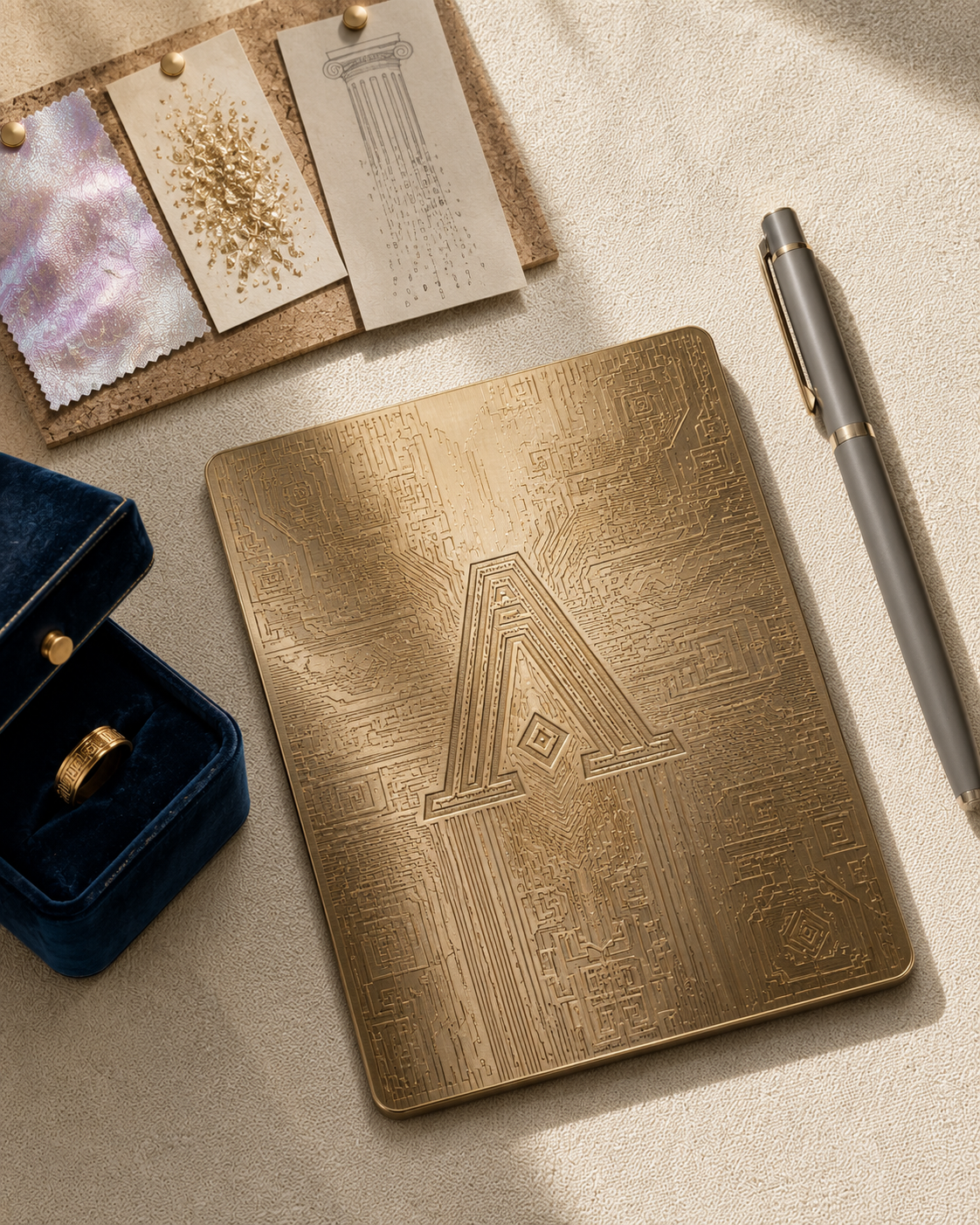
Generative intelligence is quietly rewriting the rules of luxury visual identity. As synthetic media matures, brands are discovering a new frontier of precision, personalization, and impeccable craft.
The Precision Instinct
Luxury has always been a study in precision — every detail considered, every imperfection eliminated. For decades, that precision was achieved through painstaking manual craft: retouching, reshoots, endless rounds of revision until a single image felt worthy of a brand's name. Artificial intelligence, once viewed with skepticism by purists who saw it as a threat to authenticity, is now emerging as an unlikely ally in this exact pursuit.
Generative visual tools allow brands to render textures, environments, and product narratives with a level of flawlessness that once demanded weeks of production. A marble surface can be rendered with the precise cool tone of an Italian quarry. A studio environment can be constructed and lit in minutes, then refined endlessly, without a single physical asset ever leaving storage. What matters is not that the process is faster — it's that the artistic intention behind every frame remains fully intact, and often sharper than before.
From Automation to Amplification
What distinguishes this new era is not automation, but amplification. Early conversations about AI in creative industries focused on replacement — machines doing what humans once did, only cheaper. That framing misses what is actually happening at the top of the market.
AI-driven content is enabling hyper-personalization at a scale that was previously unimaginable. A campaign can now adapt to individual client sensibilities: a hospitality brand can render its suite imagery in the exact palette a specific market responds to; a jewelry house can generate product visuals tailored to a client's known aesthetic preferences, informed by prior engagement rather than guesswork. This is not mass production dressed up in a new vocabulary — it is bespoke craftsmanship, reimagined through synthetic media, delivered at a pace human production alone could never sustain.
Just as importantly, AI has begun to close the gap between concept and execution. A creative director's early sketch of a mood — the feeling a campaign should evoke before a single asset exists — can now be tested visually within hours rather than weeks. This compresses the distance between imagination and impeccable output, giving brands more room to experiment before anything is finalized.
Where the Line Still Matters
For brands like Aethel Studio, the real opportunity lies in balance: harnessing AI's precision without surrendering the human eye for elegance. Synthetic media can generate infinite variations, but it cannot yet decide which variation carries the emotional weight a luxury brand requires. That discernment — the ability to recognize restraint, to know when a detail should be quieted rather than amplified — remains a distinctly human contribution.
The future of luxury aesthetics will not be defined by artificial intelligence alone. It will be defined by how gracefully that intelligence is woven into a brand's existing language of refinement — used as an instrument for precision and scale, guided always by a discerning creative hand.
What This Means for Premium Brands Today
Brands considering this shift often ask the same question: where should AI enter the process first? In practice, the highest-value starting points tend to be the areas where iteration speed matters most and emotional stakes are lowest — early concept exploration, environment and mockup generation, and rapid variation testing for campaign visuals before a final creative direction is locked. These are the stages where AI's speed creates genuine strategic advantage, freeing human designers to spend their time where it matters most: refining the final 10% that separates competent work from work that feels inevitable. This same principle of restraint over automation is what makes dynamic visual content so effective for luxury brands — technology in service of craft, never replacing it.
What should remain firmly human is anything touching brand voice, final art direction, and the emotional register of hero imagery — the handful of assets a client will actually remember. Used this way, AI does not dilute a luxury brand's visual language; it protects the studio's most valuable resource, the time and attention of its most experienced creative minds, for the decisions only they can make.
Brands that treat AI as a collaborator rather than a shortcut will be the ones who set the visual standard for the next decade of luxury.